
Matt’s Notes
Thanks for joining us for this episode of EnT, everyone! This time around we’re talking about approaches to education, and how these have changed over the centuries and decades. We’re all in on a discussion which involves curriculum, apprenticeships, and alternative approaches to teaching and learning!
We’re on video, with conviction! #ednnotech
This audio may change your views on education, as well as having other effects! #ednontech
This topic puts me in the mind of travel.
Even as we discussed travel and education explicitly in our previous episode, Doug’s framing of approaches to education caused me to think about the distance between what is and what could be, between ideas and actions, and between curriculum and how it taught to students.
Lately, as I try and make sense of my own personal and professional context, I often find myself thinking of the ancient Greeks and Romans, particularly the stoic philosophers. Heraclitus was a significant pre-Socratic philosopher (circa 500 BC) who is noted for, among other things, his concept of the universe being in a constant state of flux. He famously stated: “No man ever steps in the same river twice”. The stoics based much of their cosmology on this concept of universal flux, which I find expressed most meaningfully by Marcus Aurelias in his Meditations.
This statement resonates for me on a personal level. I find this idea that both ourselves and the world around us are always changing profound, particularly as I grow older. Education is a river of sorts which can lead to experiences unique to the moment and the individual. Every day is an opportunity to learn something new, and to test yourself as an older, presumably wiser person against the currents of time and events.
In the recordings, we discuss various approaches to education which by its wording implies travel. To come to somewhere new through a highly personal path is a function of life which our structures for teaching and learning are meant to help accommodate. The value which we as a society place on certain aspects and types of curricula is expressed in the kinds of programs and teaching methods offered by institutions of learning, whether K-12 or post-secondary. These curricular choices have serious, tangible effects on our quality of life. When one approach is chosen, it is by definition at the exclusion of all other possibilities.
As educators we grow ourselves, even as we have the privilege of helping others through their growth. Ours is a helping profession, and it is an honor to be able to do so. This calling, and I do think of it as a calling or vocation, can be personally and professionally challenging. As Doug and I have said variously across these episodes, we wouldn’t recommend our respective paths to anyone else. But for those who are willing to make the effort, the personal rewards can be significant.
Speaking from my personal history, I can definitely say that my journey has led me places which would have been impossible to predict at the outset. The tumult and the instability and downright insecurity of my present circumstances can be mentally and emotionally draining at times. I have been known to wonder at my own past decisions, particularly in regards to certain career choices. And while I sometimes look back at my former self with curiosity, it is also with appreciation for what the past person went through to lead to the mentality to make those decisions. I try and regard my past self with care and empathy. And I try and view my future, unknown as it is, optimistically. While other kinds of work may have provided more material stability, the inner benefits of having helped someone else in some way or other, even if simply through serving as a cautionary example, more than make up for it.
It’s never the same river twice.
Doug’s Notes
Approaches to education: How did we end up here?
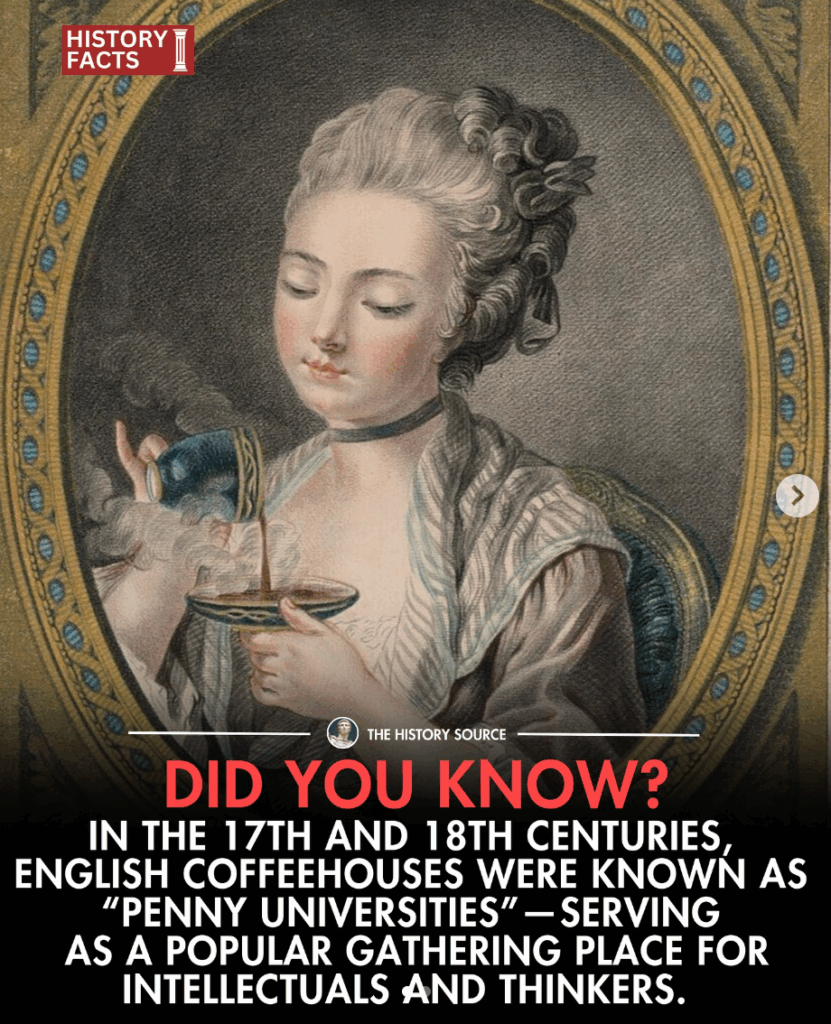
What did the ancients fix upon as the course of study in their schools? In what way have we varied from the curriculum?
Music had originally included all the branches of intellectual and moral education – all departments presided over by the Nine Muses.
Laurie, S. S. (1887). The rise and early constitution of universities: with a survey of mediaeval education (No. 91). D. Appleton.
…throughout human history, the majority of occupational preparation has been premised upon apprenticeship as a mode of learning, that is, as preparation and ongoing learning arising mainly through active and interdependent engagement by apprentices in their work, rather than their being taught or directly guided by more experienced practitioners.
Apprenticeships are usually seen, in contemporary times, as a model of education focused on occupational preparation
Billett, S. (2016). Apprenticeship as a mode of learning and model of education. Education+ Training, 58(6), 613-628.
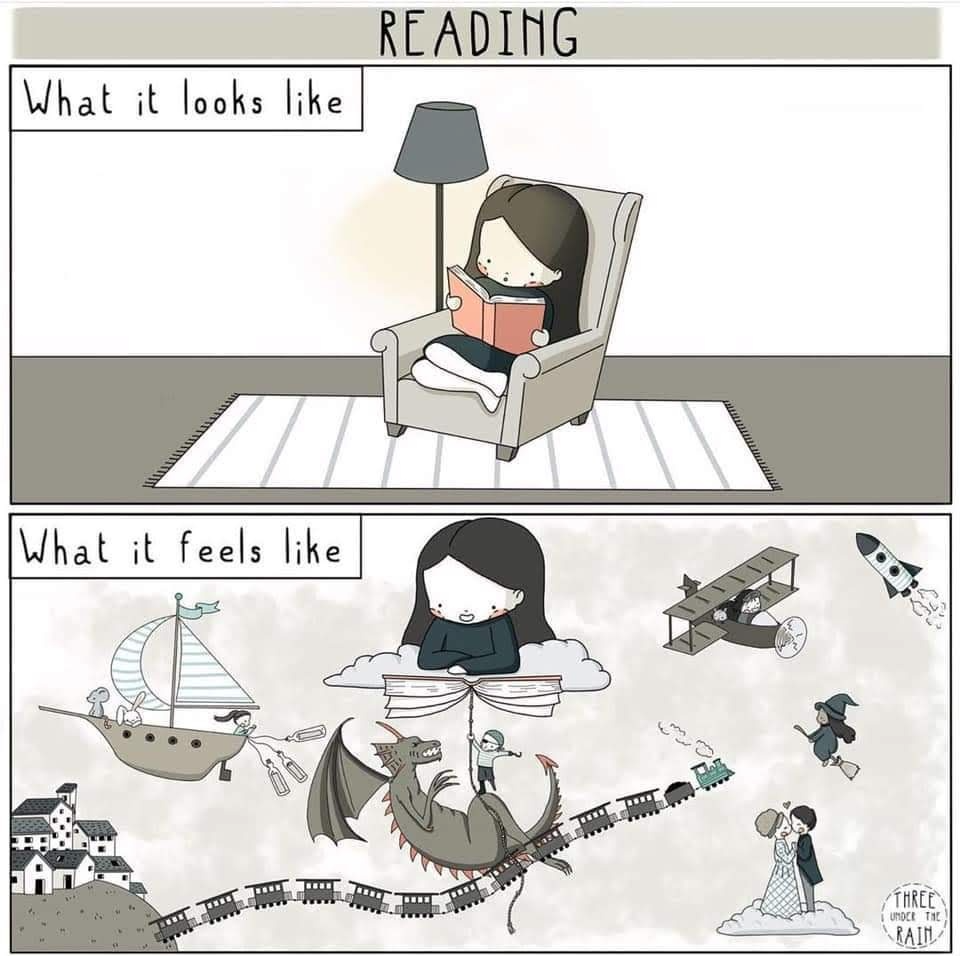
Reader’s Note: This article is so direct with its points, I loved it. It was such an enjoyable read.
The author starts from Einstein’s thesis that everybody is a genius, but reaches the conclusion that genius is not supported by modern education. The model “to teach everyone everything” is still the predominant model of education. Schools of today kill the creativity of students.
Around 80% of teaching materials in schools are dedicated to the past or to coping skills to get through a school maze.
Suzić, N. (2017). Traditional schools in the modern age. INOVAEDUCATION 2017, 24.
In the first half of the twentieth century, characterized by the development of remote and sparsely populated areas, the governments of Canada, the USSR and Australia tested various educational models for the local population.
Such a situation with the education in the sparsely populated areas of Siberia and the North turned out to be quite lasting. Boarding schools used old approaches or their elements, which proved to be inefficient or even harmful for children.
Nevskaya, M. V. (2018). Schools of the air in Australia. The modern distant learning prototype.

Alternative schools such as Montessori, Reggio Emilia or Waldorf emerged on the educational scene over a century ago but have proliferated internationally in the last 15–20 years.
Overall, the results show a better performance in children from alternative schools or no differences with their counterparts in conventional schools.
Guerrero, S., Valenciano-Valcárcel, J., & Rodríguez, A. (2024). Unveiling alternative schools: A systematic review of cognitive and social-emotional development in different educational approaches. Children and Youth Services Review, 158, 107480.
Word of the Podcast
Traditional
Question of the Podcast
How did we end up with “traditional” education and how traditional is it actually?
Phrase of the Podcast
Anything you are going to plan on, is probably not going to happen.
Thank you for being in this particular place! We hope you’ll be back again soon!
I know we don’t talk much but you’re but you’re such a good talker,
Well I know we should take a walk but you’re such a fast walker #ednontech
Podcast: Play in new window | Download
