
Matt’s Notes
How strange for me… to be writing these words days before we record! For a change!
In this episode we are all about Personal education infrastructure (PEI)… and uh, hence the title! Of course I’m not joking. Of course.
ANYWAY
Please click the links below as per your inclinations!
There were times! And places! You can bet on it! #ednontech
Pandemonium is at expected levels! That’s good around here #ednontech

Anyway! In the interests of a TRANSFORMATIVE time with this podcast format, I’m going to do my part and clear out some links that I’ve been emailing to myself over past weeks. You might even call it a PIVOT. But I’d really rather you didn’t! You’re welcome in advance!
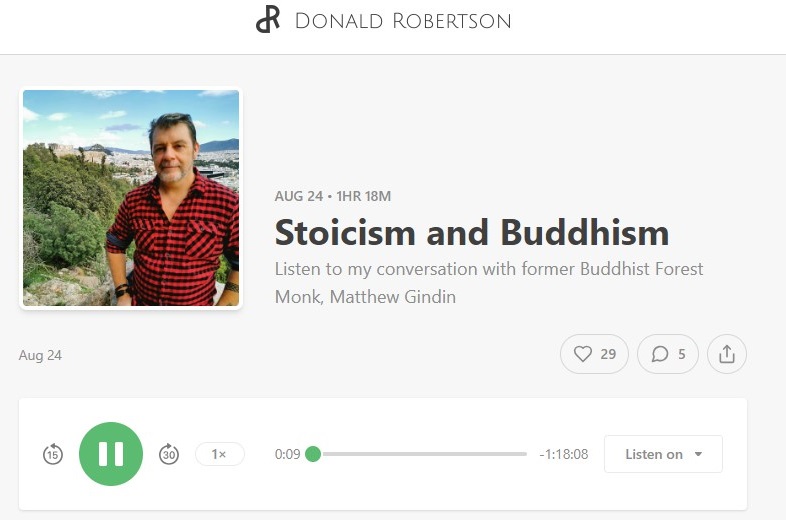
“Stoicism and Buddhism“ a conversation between Stoic scholar and author Donald Robertson and former Buddhist Forest Monk, Matthew Gindin. I got this from Robertson’s Substack newsletter. It’s a pretty excellent chat, if philosophy is even remotely your thing!
What Are Dreams For? is the kind of article that makes me glad to get The New Yorker sent to my inbox, even if it almost always goes deleted & unread. Almost always. The neuroscience of dreams is interesting… or could be… particularly if you have OBSTRUCTIVE SLEEP APNEA or uh, any other kind of sleep disorder…
A lovely retro piece on free online courses, or as I call them FOC’s (say it aloud, like a word!) from the Guardian… “Do online courses spell the end for the traditional university?” This is, you may recall during peak FOC hype… the same year and same month as a very NOTICED and/or NOTICEABLE article in the New York Times… I’ve done more than a few presentations mentioning said NYT piece… mainly in another phase of an increasingly storied (not to say sordid) career, it must be said…
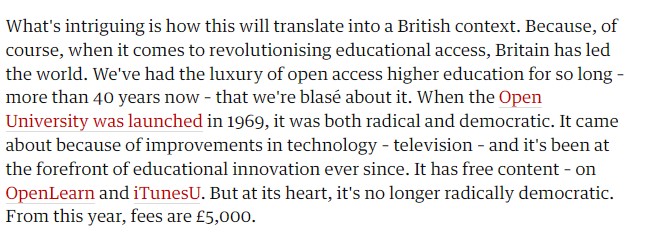
I will confess to enjoying the reference here to the challenges of the OU. I have what I must call an abiding interest OU courses and programming. I spent a few good days of professional development accessing free modules on project management… to see what these modules’ experience was like as courseware… as much as for the interesting and potentially useful content…
AND FINALLY
Not to say that this is the end of the emails-to-self, but simply this is as far as I am prepared to take these notes for this episode! We’ll consider this a preview, because next time we do an AI-related episode, I will be taking a deeper dive… but suffice it to say that this is ONE MORE THING to do with AI… a white paper from an education consultancy which, at first glace, appears to summarize nicely some of the key issues for those who might be new to these goings-on… this would include me, because I am now more properly situated in “workplace” and/or “security and defense” teaching and learning contexts than “post-secondary” as such…
I will likely have more articles to shake out of my email next time!

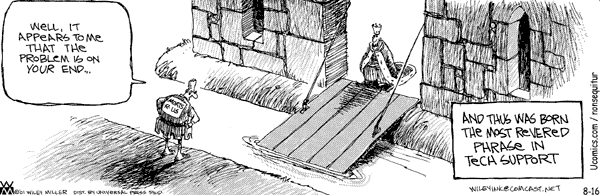
There are tech problems, and then there are #ednontech problems, amiright?
Doug’s Notes
Personal Education Infrastructure (PEI)
“The mention of infrastructure is vital here”
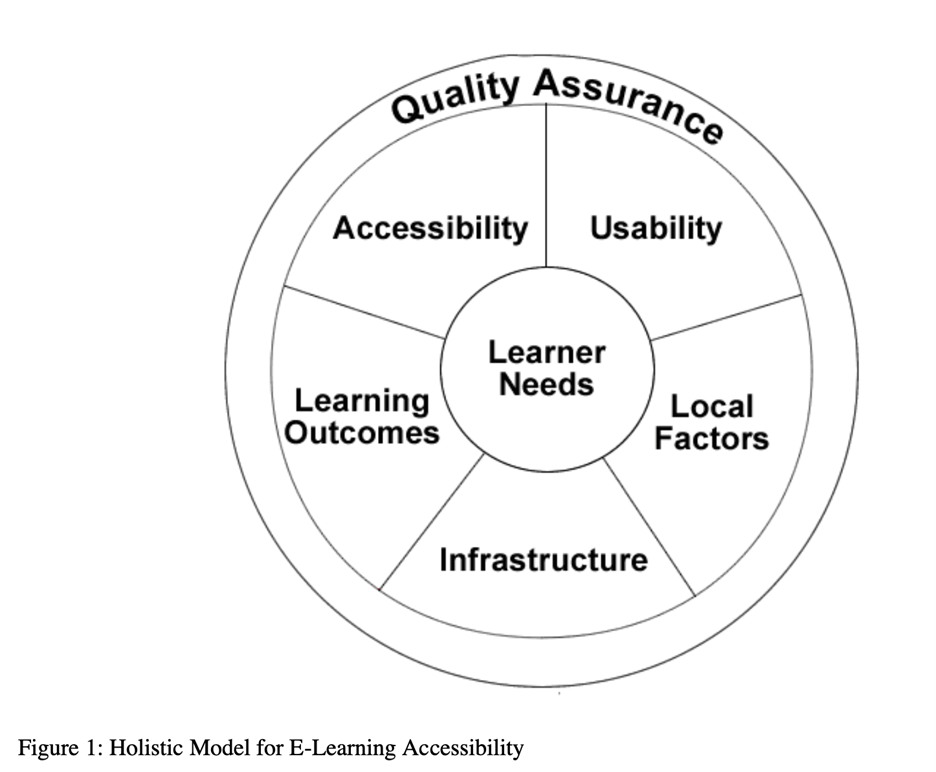
… although the W3C WAI guidelines for content accessibility are valuable, they should not be regarded as the only set of criteria, which developers of e-learning resources need to consider.
Kelly, B., Phipps, L., & Swift, E. (2004). Developing a holistic approach for e-learning accessibility. Canadian Journal of Learning and Technology/La revue canadienne de l’apprentissage et de la technologie, 30(3).
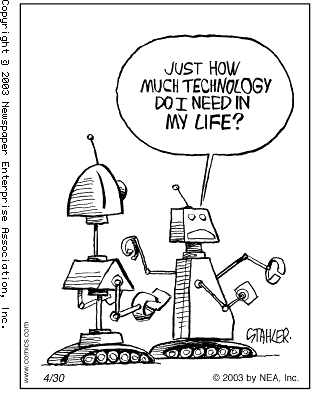
… the lack of knowledge about how to make e-learning accessible was surprising, given the large number of tools that had been developed to supposedly help teachers in this endeavour.
Seale, J., & Cooper, M. (2010). E-learning and accessibility: An exploration of the potential role of generic pedagogical tools. Computers & Education, 54(4), 1107-1116.
This paper seeks to avoid both techno-centric and econocentric analysis …
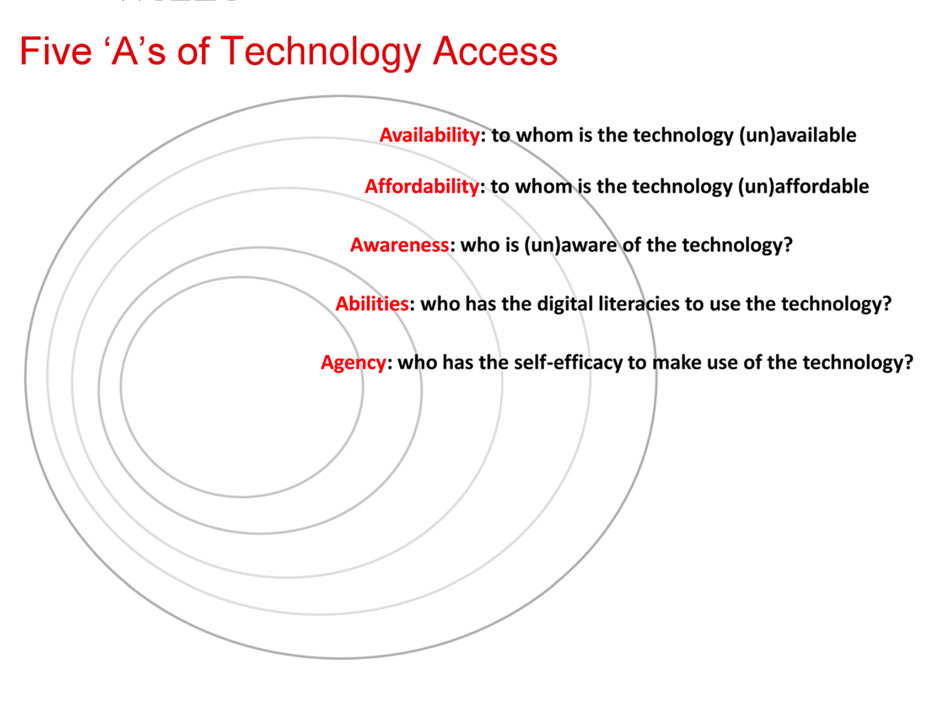
Roberts, T., & Hernandez, K. (2019). Digital access is not binary: The 5’A’s of technology access in the Philippines. The Electronic Journal of Information Systems in Developing Countries, 85(4), e12084.

The digital revolution is transforming education by using information and communication technologies (ICTs) to improve students’ learning outcomes. In the last 50 years, changes can be seen in every area of society, such as culture, entertainment, and social interaction. However, the current educational model is very similar to how it was back then.
Criollo-C, S., Guerrero-Arias, A., Jaramillo-Alcázar, Á., & Luján-Mora, S. (2021). Mobile learning technologies for education: Benefits and pending issues. Applied Sciences, 11(9), 4111.
Word of the podcast
Infrastructure
Phrases of the podcast
(In situ) “I want disruptive, but not like that…”
&
It’s all learning, isn’t it?
Question of the podcast
How can educators help those students and fellow educators that have technology accessibility challenges?
Wanna be someone who counts
But you’re thinkin’ about the times you did, they took every ounce
#ednontech
We are mostly uncompromising in our gratitude to you for checking out our podcast!
Podcast: Play in new window | Download
