
Matt’s Notes
This one goes all the way back to November!
It’s about the history of innovation! We have a great many of no doubt great things to say!
The one about of men and minions! #ednontech
If it’s audio, you know we’re all about it! #ednontech
It would take more time than is reasonable to get into the how’s, why’s, what’s, and wherefores of the past few months, and especially the latter half!
A few months that felt certainly like much longer!
In the midst of a few days that are what we call in the biz “stunt production” of 5 podcast episodes that have somehow accumulated over the past while, a few things have become apparent!
The biggest thing I can think of after more than a week away from submitting my first batch of final grades in the better part of ten years, is that for all the changes over the past decade WELLNESS is more important than ever.
It’s a cliché’ at the present, maybe! But I’ll be saying it loudly and at length from now until the end of my career, at least!
To that end, I’m reupping and recharging and rejuvenating my online platforms! My personal education infrastructure (PEI), you know, is undergoing significant changes to accommodate… and hopefully to enhance… the facts on the ground! As the ground has literally shifted from under me at least twice in the past three years!
More on this later? To be continued? You betcha!

Doug’s Notes
History of Innovation
List of educational innovations in India after the British got there
- Early association of education with mIssionary enterprise
- Desultory attempts at education
- Recognition of the claims of the masses to education
- Education for the masses revived
- Education for the masses still neglected in Bengal
- Female education
Before coming to the regular parts of the educational machinery, it is necessary to show what is the present condition in each province of the indigenous schools, i. E. the purely native schools not improved up to the government standard.
Educational machinery or schools
- Indigenous
- Lower
- Middle
- High
- Normal and special, including Schools of Art
Howell, A. P. (1872). Education in British India, Prior to 1854, and in 1870-71. Office of the Superintendent of Government Printing.
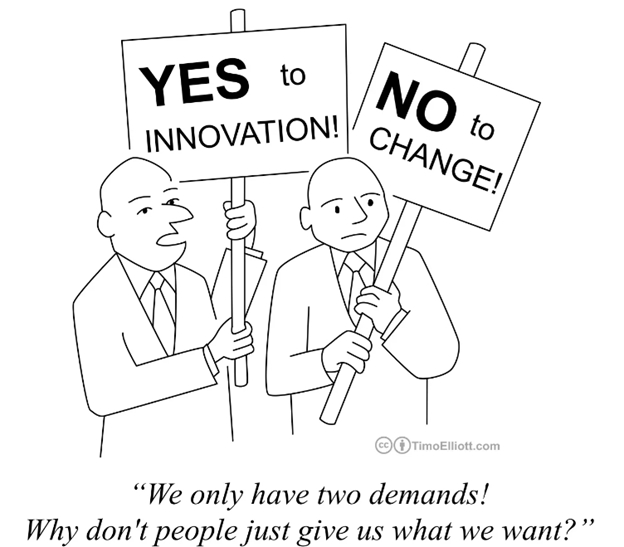
We are often given to the idea that attention to industrial arts in the common or public schools is a late development. There is often more or less of a hesitancy upon our part to introduce work of the kind into the curriculum, fearing that it is too much of an innovation, too radical a departure from the established traditions.
Aldrich, F. R. (1913). Industrial Education in the Early Nineteenth Century. The Elementary School Teacher, 13(10), 478-485.

Formative periods of adult education in the Netherlands
- Protestant Reformation – sixteenth century
A stimulus for the development of educational activities in this period was the development of printing, the translation of the Bible into the vernacular and the achievement of high levels of literacy.
- Organized adult education – late eighteenth century
There are frequent references to the activities of societies, associations and clubs established for the purposes of advancing and diffusing knowledge, encouraging the rational improvement of commerce, manufactures and agriculture, the stimulation of literature, poetry and drama, and the organization of lectures and scientific demonstrations.
- Leveraging research – 1890 to 1930
stands out as a period which has been the subject of considerable research. Major studies have examined the development of adult education in the women’s, socialist and trade union movements; while others have examined the role of philanthropic and humanitarian movements in the development of university settlements in the form of folkhouses; the folk universities, public libraries, and folk high schools.
- Current – 1970s until today
Active response by the Dutch government to such initiatives and the subsequent institutionalization of adult basic education, evening and day schools for adults, and a major reorganization of vocational educational and training.
Hake, B. J. (1994). Formative Periods in the History of Adult Education: The role of social and cultural movements in cross-cultural communication. Cultural and Intercultural Experiences in European Adult Education. Essays on Popular and Higher Education since, 10-36.


*** This is one of my favourite articles I have presented in the run of this podcast. ***
… conclude that the human factor is often considered as the most influential factor on the chances of failure or success.
Educational innovations, such as implementing a new pedagogic method such as problem-based learning, are sometimes the result of an intuitive and hasty decision to change. And without a proper investigation of aspects as problems the innovation is supposed to solve, needs of the future users, willingness of different participants to cooperate and success and fail factors of this particular project, the success of the innovation is at stake.
Kirschner, P. A., Hendricks, M., Paas, F., Wopereis, I., & Cordewener, B. (2004). Determinants for Failure and Success of Innovation Projects: The Road to Sustainable Educational Innovation. Association for Educational Communications and Technology.

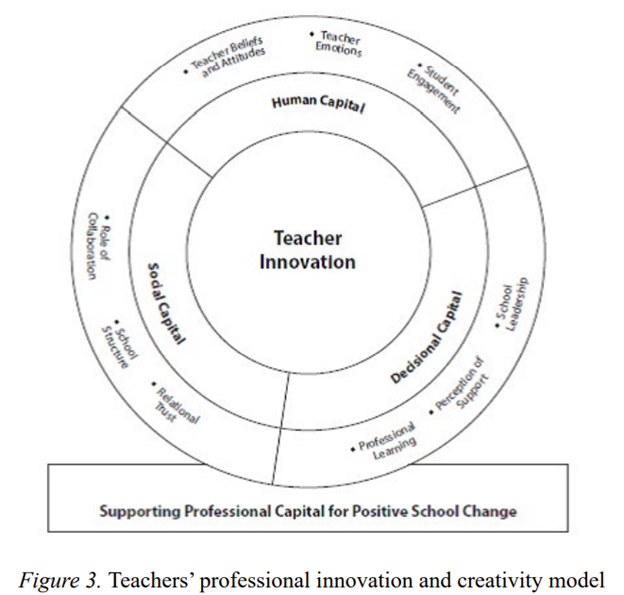
… the acceptance of teachers as sources of professional capital in education acknowledges the importance of teacher skill, technical knowledge, and methodological expertise.
professional capital
- human capital,
- social capital, and
- decisional capital
Holdsworth, S., & Maynes, N. (2017). “But what if I fail?” a meta-synthetic study of the conditions supporting teacher innovation. Canadian Journal of Education/Revue canadienne de l’éducation, 40(4), 665-703.

The future of #ednontech?
Word of the Podcast
Innovation
Question of the Podcast
What do you consider to be educational innovation?
Phrase of the Podcast
This article made me think…

All you pretty boys and girls, thanks for joining us here in the modern world!
In the modern world
Pretty boys and girls
We’ve been hangin’ on forever
By the radio with the afterglow #ednontech
Podcast: Play in new window | Download
